Life on the road: Q&A with Dave Suddick and Rob Hartley, Service24h Technicians

When a Mercedes-Benz commercial vehicle breaks down, getting the customer back on the road quickly is what matters. Behind the Service24h response is a team of technicians who spend their working days travelling to customers, diagnosing faults and carrying out repairs wherever they can.

But what is life really like for the people on the road? We have 21 Service24h Technicians across 8 locations, so today we caught up with Dave Suddick and Rob Hartley based in our Coventry location, to find out more about their roles, the challenges they face and how roadside assistance has changed over the years.


What do you enjoy most about being out on the road, and what does a typical Service24h call-out involve?

Dave said he prefers being out on the road rather than working in the workshop, “You get a bit more independence because you're managing yourself and the job you're attending.”

For Rob, it's the variety of the work that stands out, with every call-out bringing something different. “Every day is different; new people, new places and new challenges.”

When it comes to a typical breakdown, they explained that there isn't really a standard call-out, as every job depends on the vehicle and the problem they're dealing with. “We get the information about the breakdown, then head out to the customer. Once we're there, we assess the vehicle, find out what's gone wrong and work out the best way to get it back up and running, then determine whether we can repair the vehicle at the roadside or if it needs further assistance."

There are targets for responding to breakdowns, including two hours for vans and 50 minutes for trucks. Keeping the system updated is an important part of the process too. "We update our location and what's happening with the job, so the team can see where we are and how things are progressing."


What parts do you typically carry on a breakdown van?

With the aim of getting vehicles back on the road at the roadside wherever possible, having the right tools, equipment and parts available is an important part of the job.

“We carry a range of parts and equipment on the van, depending on the type of jobs we're likely to attend. We have the tools and equipment we need for roadside repairs, as well as parts that we're likely to need.

Batteries and lamps are probably some of the things we replenish most often. We also carry things like NOx sensors and mirrors. Running out of fuel and flat batteries are two problems we see quite regularly, so it's useful to have those parts available."

Having the right equipment to hand can make the difference between completing a repair at the roadside and needing to recover the vehicle to a workshop.


What are some of the biggest challenges of working at the roadside?

Working at the roadside means dealing with a wide variety of situations, and not all of them are straightforward. "Being on the side of a motorway can be difficult, especially on dark and rainy days."

"Smart motorways can add another challenge. If we need a lane closing though, we can contact the relevant people and it can be closed quite quickly. They can also slow the traffic down, allowing us to merge back onto the road more safely."

Single Image 2

Safety is always a priority when attending a breakdown, not just for the technicians but for the customer too. When a vehicle has broken down at the roadside, getting everyone to a safe position and making sure the vehicle can rejoin the motorway safely is an important part of the job. Taking care when merging back onto the motorway and making sure the traffic is slowing or there is a safe gap can help make the process safer for everyone.

The run-up to Christmas is probably the worst time of year for breakdowns. "Everyone is rushing around, the roads are busier and businesses are trying to get deliveries finished before Christmas.

It's also a time when vehicles can get very busy. Sometimes servicing and maintenance gets put off because the vehicle is needed on the road. They're doing more miles but aren't necessarily getting the maintenance they need, which can then lead to problems and breakdowns."


Do you have any tips for drivers who find themselves broken down?

For anyone who finds themselves broken down, their main advice is to prioritise safety. “The main thing is to stay calm and make sure you're in a safe location where possible. Keep some warm clothes in the vehicle, especially in the winter, as well as some food and water. A torch and a phone charger are useful to have too, and if you've got high-visibility clothing, keep that in the vehicle.

It's also important to know where you are. With Google Maps and modern technology, it's much easier to pinpoint your location if you need to call for assistance.


What's one of the most memorable jobs you've attended?

After years of attending breakdowns, there have been plenty of jobs that have stayed in the team's memories.

Dave explained that it's often the unusual situations that stand out most. "One that sticks in my mind was an Atego where the cab had fallen off the truck. They hadn't locked the cab down properly, so it had come away from the vehicle."

You come across all sorts of situations on the road, so you never know what you're going to be dealing with.

Single Image 1


How has the job changed since you started?

Technology has changed considerably over the years, and Dave has seen that first-hand during his time working in roadside assistance.

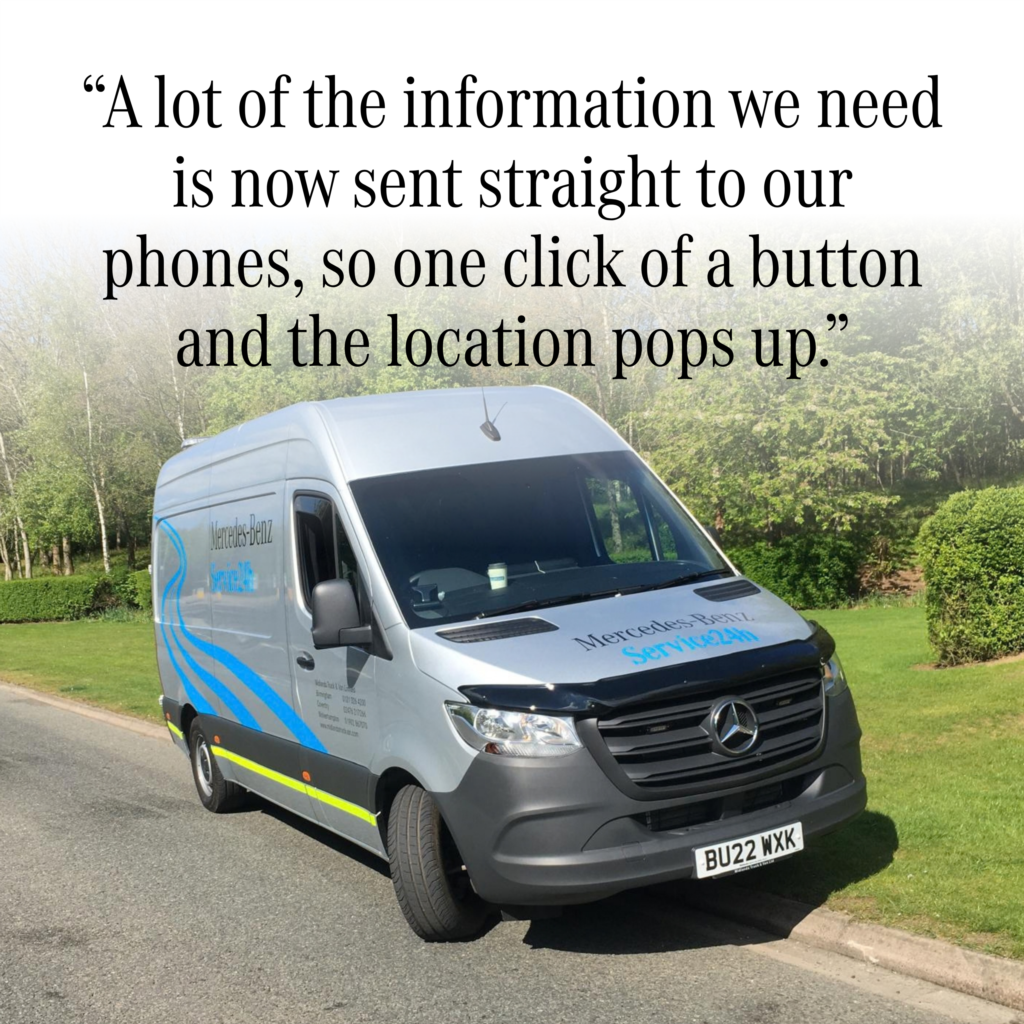
"Maps are a good example. A lot of the information we need is now sent straight to our phones, so one click of a button and the location pops up. It makes finding the customer much easier."

Having information about the job and the customer's location available before they arrive has made the process much more efficient. The same applies when it comes to diagnosing faults and preparing for the repair. The vehicle's onboard computer can provide information about the type of breakdown, giving technicians an idea of what they are likely to be dealing with and helping them identify the tools and parts they may need.

"We can download diagnostic information from the vehicle, which can give us an idea of what the problem might be and what parts we could need. That information can then be sent through to the breakdown system, so we have a better idea of what we're dealing with before we get there and can make sure we have the right parts with us. And when we're not out on the road, we go back into the workshop and carry out jobs there. There's always something to be getting on with."


Life on the road

For Dave and Rob, being a Service24h Technician means working in a role where every day brings something different. From busy roads and difficult weather conditions to unusual breakdowns and new technology, there's always something to keep them on their toes.

But ultimately, the goal remains simple: get to the customer, find the problem and do everything possible to get them moving again.

What to do if your truck or van breaks down

To request roadside assistance from the UK, call:

Van: 00800 3777 7777 or +44(0) 207 660 9991
Truck: 00800 5777 7777 or +44(0) 207 660 9992

From mainland Europe, call:

Van: +44(0) 207 660 9991
Truck: +44(0) 207 660 9992

Breakdown support for customers with hearing impairments is provided via the following email address: hls.gbr@cac.mercedes-benz.com

Please include the following data so that we can provide support as quickly as possible:
Vehicle details (VIN and License Plate), Owner/company details, description of the problem and location of the breakdown.

The Mercedes-Benz Service 24h colleagues will contact you if further details are required.

Contact us

Contact our team today for more information.

Loading...